SURWASH Delegation Explores Brazil's Best Practices to Strengthen Nigeria's WASH Sector
SURWASH delegation explores Brazil’s water & sanitation models in São Paulo, Brasília & Ceará to accelerate Nigeria's WASH sector reforms from 23–27 March 2026.
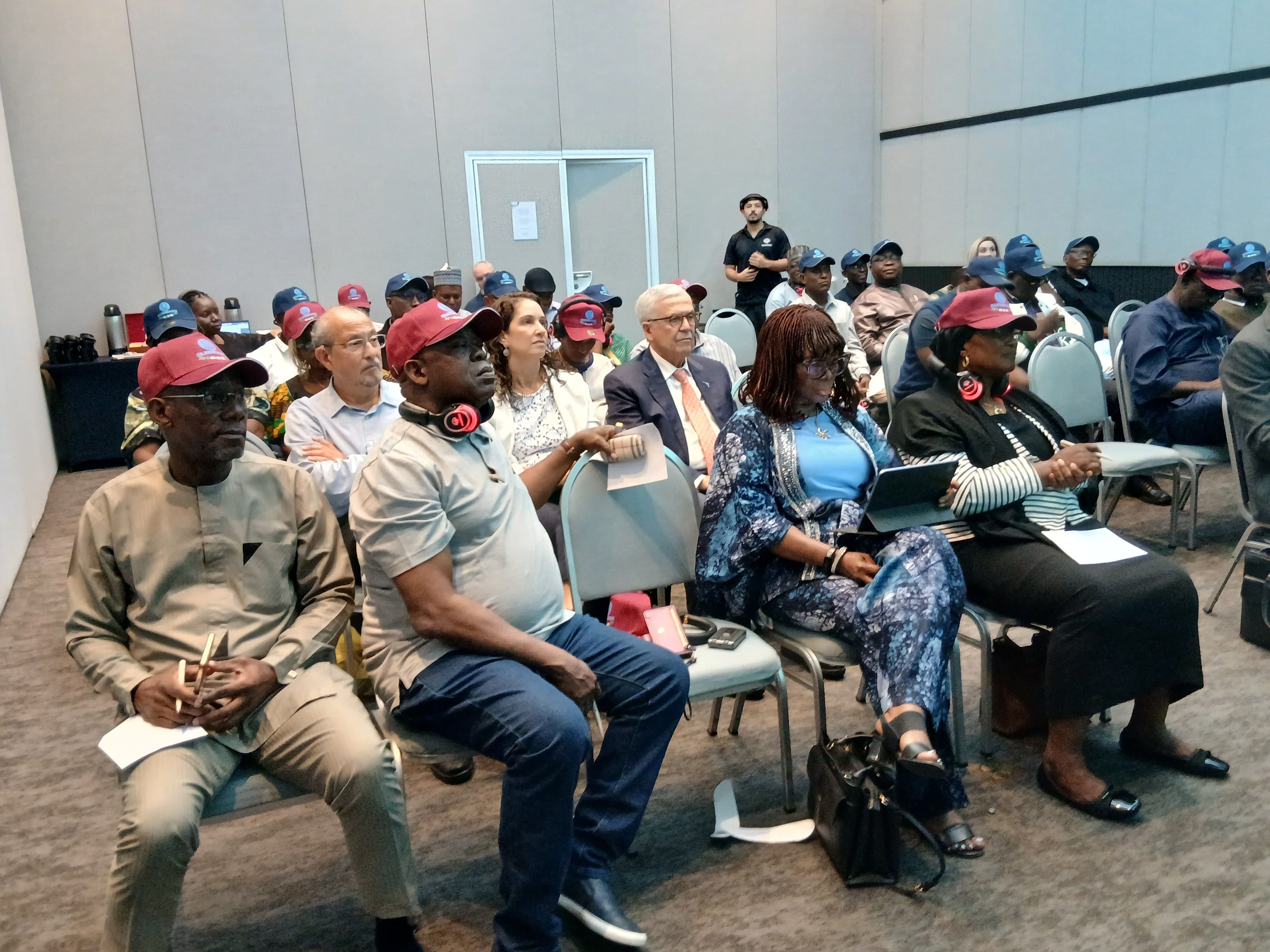
As part of ongoing efforts to strengthen water, sanitation and hygiene (WASH) service delivery in Nigeria, the Sustainable Urban and Rural Water Supply, Sanitation and Hygiene (SURWASH) Programme, with support from the World Bank, facilitated a study tour to Brazil from 23–27 March 2026.
The Nigerian delegation comprised policymakers and technical officers from the Federal Ministry of Water Resources and Sanitation and the SURWASH implementing States of Delta, Ekiti, Gombe, Imo, Kaduna, Katsina and Plateau. To maximise learning opportunities, participants were divided into three streams that visited São Paulo, Brasília and Ceará, each focusing on different aspects of water and sanitation service delivery, regulation and institutional development.
São Paulo Stream: Advancing Urban Water and Sanitation Services
The São Paulo team focused on urban sanitation, Citywide Inclusive Sanitation (CWIS), utility reforms, regulatory oversight and public-private partnership (PPP) models. The delegation visited SABESP, SANASA and the São Paulo State Regulatory Agency (ARSESP), as well as wastewater treatment facilities and communities benefiting from improved sanitation services.
At Companhia de Saneamento Basico do Estado de Sao Paulo (SABESP), participants observed how utility reforms, strategic private sector participation and technology have significantly improved operational efficiency while expanding access to water and sanitation services for millions of residents, while pursuing universal coverage across Sao Paulo state by 2029. The utility demonstrated innovative approaches to reducing non-revenue water through artificial intelligence, digital monitoring systems, leak detection technologies and pipeline replacement programmes. Participants also explored circular economy initiatives, including wastewater reuse for industrial purposes, biogas generation and resource recovery from sewage sludge.
The visit to Agencia Reguladora de Servicos Publicos do Estado de Sao Paulo (ARSESP) underscored the importance of an independent and well-resourced regulator with clear legal authority to oversee tariffs, monitor compliance and ensure quality service delivery. The agency's regulatory framework provides accountability while supporting utility performance and consumer protection.
At Sociedade de Abastecimento de Agua e Saneamento S.A (SANASA), the municipal utility serving Campinas, delegates learned how long-term planning and climate resilience are embedded in service delivery. Through its Campinas 2030 Water Security Plan, SANASA has substantially reduced non-revenue water while expanding wastewater treatment, promoting water reuse and deploying artificial intelligence for operational monitoring.
Brasília Stream: Data-Driven Planning and Inclusive Urban Sanitation
The Brasília stream examined national policy coordination, information management systems and inclusive sanitation solutions through visits to the Ministry of Cities, the National Water Agency (ANA) and the Federal District utility, Companhia Ambiental de Saneamento do Distrito Federal (CAESB).
At CAESB, delegates were introduced to the condominium sewerage model, an innovative approach designed to provide affordable sanitation services in densely populated and low-income urban communities. Rather than relying on conventional sewer networks, the model organises neighbourhoods into manageable clusters with simplified sewer connections that reduce construction costs while maintaining service quality.
Community participation is central to the model. Residents are actively involved in planning, sign agreements on service responsibilities and tariffs, and receive both potable water and sewerage services under an integrated billing system. The approach has significantly expanded access while strengthening cost recovery and financial sustainability.
Delegates also learned about CAESB's strategic investment priorities, which focus on water resilience, reduction of water losses and expansion of sewerage infrastructure. The utility further demonstrated how artificial intelligence is being used to monitor system performance and detect water losses, alongside staff innovation programmes that reward creative solutions to operational challenges.
At the Ministry of Cities, participants examined Brazil's National Sanitation Information System (SNIS/SINISA), a very comprehensive WASH management information systems. The platform compiles annual data from all 5,570 municipalities using hundreds of performance indicators to support national planning, policy development and sector performance monitoring.
The visit to the National Water Agency (ANA) highlighted Brazil's regulatory architecture, where national reference standards guide implementation by sub-national regulatory agencies. Delegates gained valuable insights into the importance of harmonised regulations, performance monitoring and evidence-based sector governance.
Ceará Stream: Sustainable Rural Water Supply through Community Partnerships
The Ceará stream focused on rural water supply, community-based management, public-private partnerships and long-term water resource management. The delegation engaged with state institutions, the public utility CAGECE, SISAR management structures and rural communities benefiting from sustainable water supply systems.
A major highlight was the SISAR model, a delegated management approach that aggregates multiple rural communities into professionally managed service clusters. The model combines community ownership with technical support from state institutions, allowing rural systems to benefit from professional operation, financial management and maintenance while retaining strong community participation.
Delegates observed that the long-term success of the SISAR model is built on strong governance, continuous technical support, financial sustainability and active community engagement. The model also demonstrates that rural communities are willing to pay affordable tariffs when reliable and quality services are consistently provided.
The Ceará experience further illustrated the importance of integrating climate resilience into water supply planning through diversified water sources, efficient resource management and long-term investment strategies capable of responding to increasing climate variability.
Key Lessons for Nigeria
Across all three study tour streams, several common themes emerged that are directly relevant to Nigeria's ongoing WASH sector reforms under SURWASH:
Strong institutional and regulatory frameworks are essential for sustainable service delivery.
- Reliable data systems support effective planning, performance monitoring and evidence-based decision-making.
- Sustainable financing requires cost-reflective tariffs, supported by targeted subsidies for vulnerable households.
- Public-private partnerships can significantly improve utility performance and operational efficiency.
- Climate resilience and water security should be integrated into infrastructure planning and investment.
- Community participation and sustained social and behaviour change communication are critical to achieving ownership, willingness to pay and long-term sustainability.
- Continuous staff development, innovation and adoption of digital technologies enhance utility performance.
- Integrated planning for water supply, sanitation and hygiene delivers better development outcomes than fragmented interventions.
From Learning to Action
The study tour has provided valuable insights that will inform ongoing reforms at both the national and state levels. Participating States have already identified priority actions tailored to their individual contexts.
Imo State plans to strengthen stakeholder engagement, improve baseline data collection, promote cluster-based sewerage systems, integrate sanitation tariffs into water billing and enhance monitoring and evaluation systems.
Ekiti State will build on its existing regulatory reforms by strengthening the Ekiti Water Supply and Sanitation Regulatory Agency (EK-WASRA), a pilot private sector participation in the management of water schemes establishing a comprehensive state WASH information management system, standardising performance indicators, improving data integration across service providers and promoting digital monitoring and transparency.
Delta State to pilot regional rural water service clusters in the management of water service delivery.
At the federal level, priority actions include strengthening the national WASH regulatory framework, expanding WASH information systems, empowering Local Government WASH Departments, promoting public-private partnerships, intensifying advocacy to end open defecation, supporting vulnerable populations and reinforcing stakeholder engagement across all levels of government.
Looking Ahead
The Brazil study tour reaffirmed that sustainable WASH services depend not only on infrastructure investment but also on strong institutions, sound regulation, reliable data, community ownership and long-term financial sustainability.
As SURWASH continues to support sector reforms across Nigeria, the lessons from São Paulo, Brasília and Ceará provide practical models that can be adapted to improve both urban and rural WASH service delivery. Through continued collaboration, innovation and institutional strengthening, Nigeria is well positioned to accelerate progress towards universal access to safe, sustainable and inclusive water, sanitation and hygiene services.