PLATEAU UNVEILS HYGIENE INITIATIVE FOR SCHOOLS AND PHCs
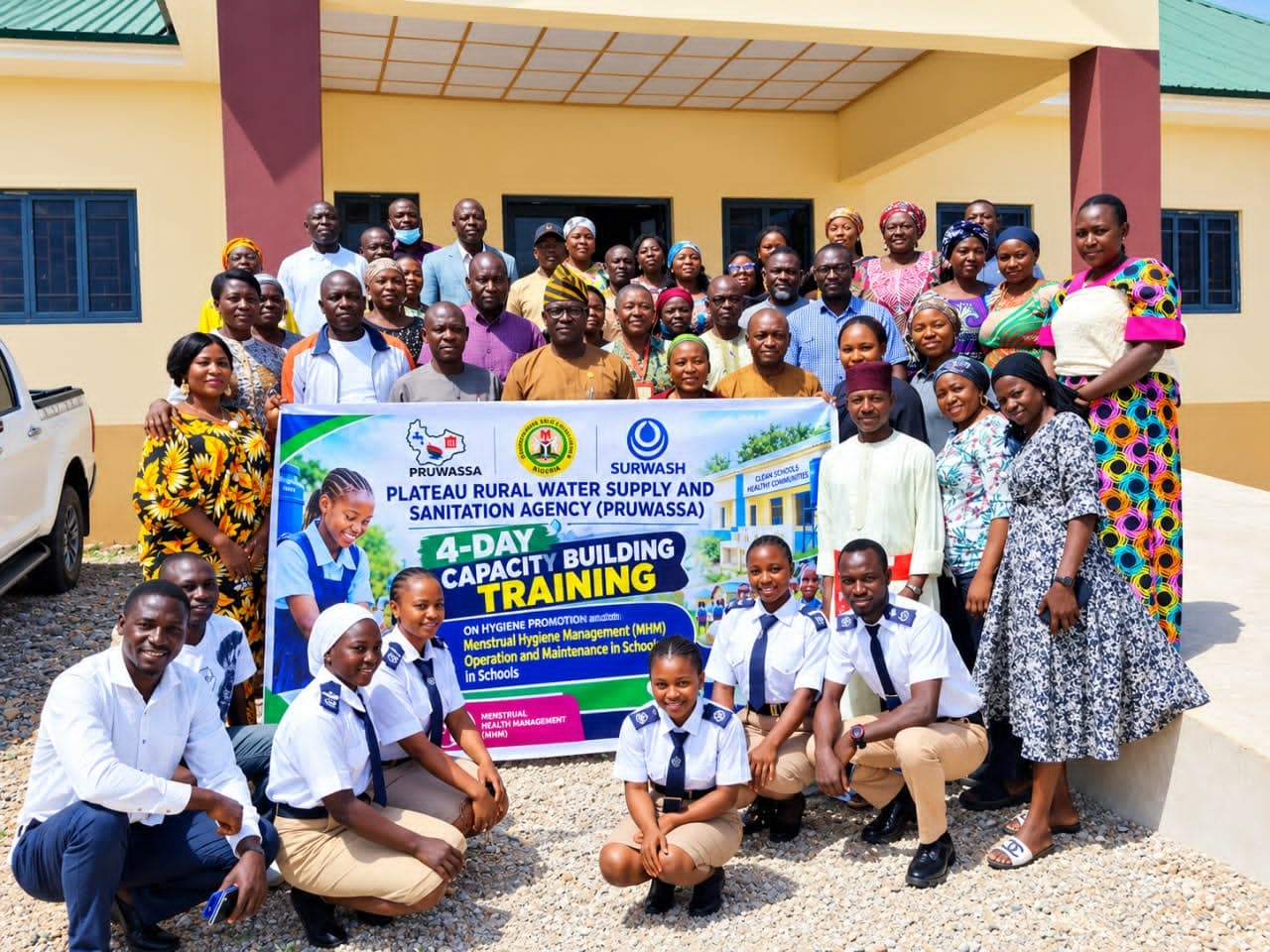
PRUWASSA concluded a multi-sectoral capacity-building workshop on Menstrual Hygiene Management under the SURWASH programme.

PLATEAU UNVEILS HYGIENE INITIATIVE FOR SCHOOLS AND PHCs
By Rotmwa Kassam Paulina
The Plateau State Rural Water Supply and Sanitation Agency (PRUWASSA)has successfully concluded a landmark, multi-sectoral capacity-building workshop on Menstrual Hygiene Management. This initiative marks a historic shift in public health governance across the region, confronting deeply rooted cultural silences that have historically constrained young girls from managing their health with safety and dignity.
The intensive training exercise brought together an essential frontline cohort comprising head teachers, hygiene/menstrual health maintenance officers, PHC staff, village development committee chairmen, school base maintenance committee/PTA and WASH staff. Convening professionals from both the educational and healthcare ecosystems, the state established a unified taskforce capable of delivering consistent, expert guidance to young learners.
Participant selection was strategically concentrated across five priority local government areas operating under the Sustainable Urban and Rural Water Supply, Sanitation, and Hygiene (SURWASH ) Programme. (Bokkos, Jos South, Langtang North, Mangu, and Wase), gathered to master actionable strategies designed to transform public health outcomes in both vulnerable rural communities.
Addressing the trainees, the General Manager of the agency, Engr. Godfrey Nuhu Dashuhar emphasized the unbreakable connection between high hygiene standards and student retention. He noted that when young girls lack access to clean facilities and proper supplies, school dropouts and chronic absenteeism spike sharply, directly hindering the educational progress of the state.
The General Manager affirmed the executive governor’s commitment to child development and public health across the State. He highlighted that state funding for specialized educator training reflects a proactive policy to prepare teachers thoroughly before they step into the classroom to handle sensitive health topics.
Urging participants to become active agents of change, Dashuhar challenged trainees to ensure that the knowledge acquired translates into immediate action. He instructed them to establish functional hygiene programs and oversee the continuous upkeep of facilities within their respective primary schools and primary health centers.
The primary objective of the workshop focused on thoroughly equipping these community figures with the technical knowledge required to step down critical lessons to primary school pupils. Facilitators emphasized that empowering teachers and health staff directly ensures that accurate, age-appropriate information reaches children at the most critical stages of their physical and social development.
At the heart of the instructional curriculum was an integrated three-pronged framework tailored to address every phase of menstrual health awareness. The first pillar addressed social perception, introducing strategies to systematically dismantle long-standing social stigmas, myths, and restrictive taboos that surround menstruation within local communities.
The second pillar focused on personal hygiene management, providing trainees with clear, evidence-based protocols covering personal care, infection prevention, and body literacy. Educators were trained to normalize these natural biological processes, ensuring students develop healthy, self-assured habits without fear of embarrassment or isolation.
The final pillar established rigorous guidelines for safe waste disposal and environmental management within educational and medical facilities. Recognizing that inadequate disposal infrastructure often drives school absenteeism, the curriculum introduced scalable practices designed to keep facilities clean, operational, and environmentally safe.
Technical delivery of the workshop was directed by a panel of veteran sanitation experts led by Nde Philip Gompang, Chairman of the State Task Group on Sanitation. Under this leadership, the training combined theoretical instruction with practical, real-world applications tailored to the specific infrastructure challenges of Plateau State.
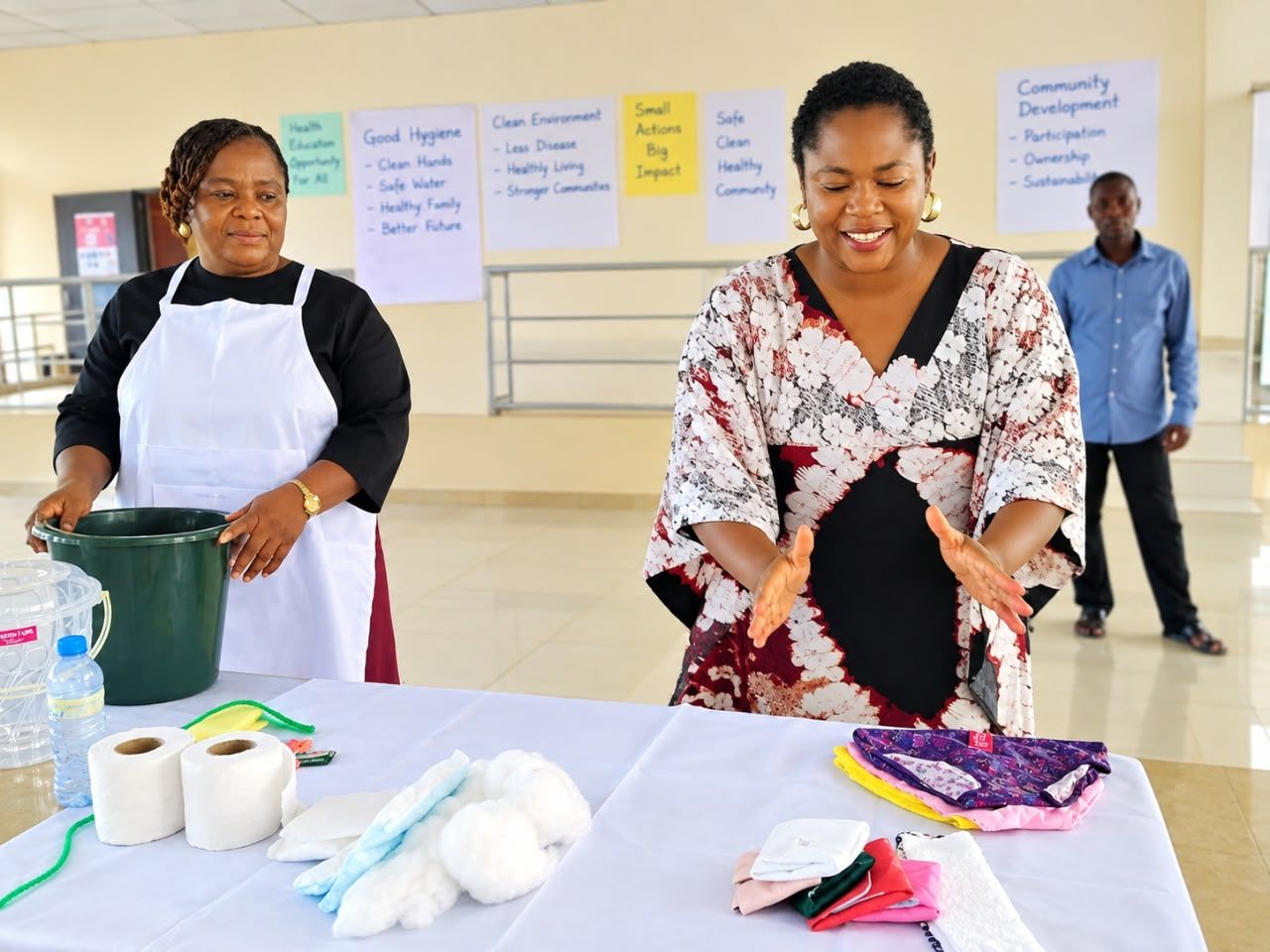
Participants were engaged in hands-on demonstrations, including step-by-step menstrual hygiene routines, proper multi-step handwashing techniques, and construction of low-cost Tippy Tap handwashing stations. These accessible, highly effective solutions ensure that even resource-constrained schools can immediately establish safe, functioning sanitation infrastructure for their students.