Federal ministry of Water resource, world Bank train surwash communications officer
The training focused digital publishing to help officers turn programme activities and data into compelling stories for the SURWASH Newsletter Blog.
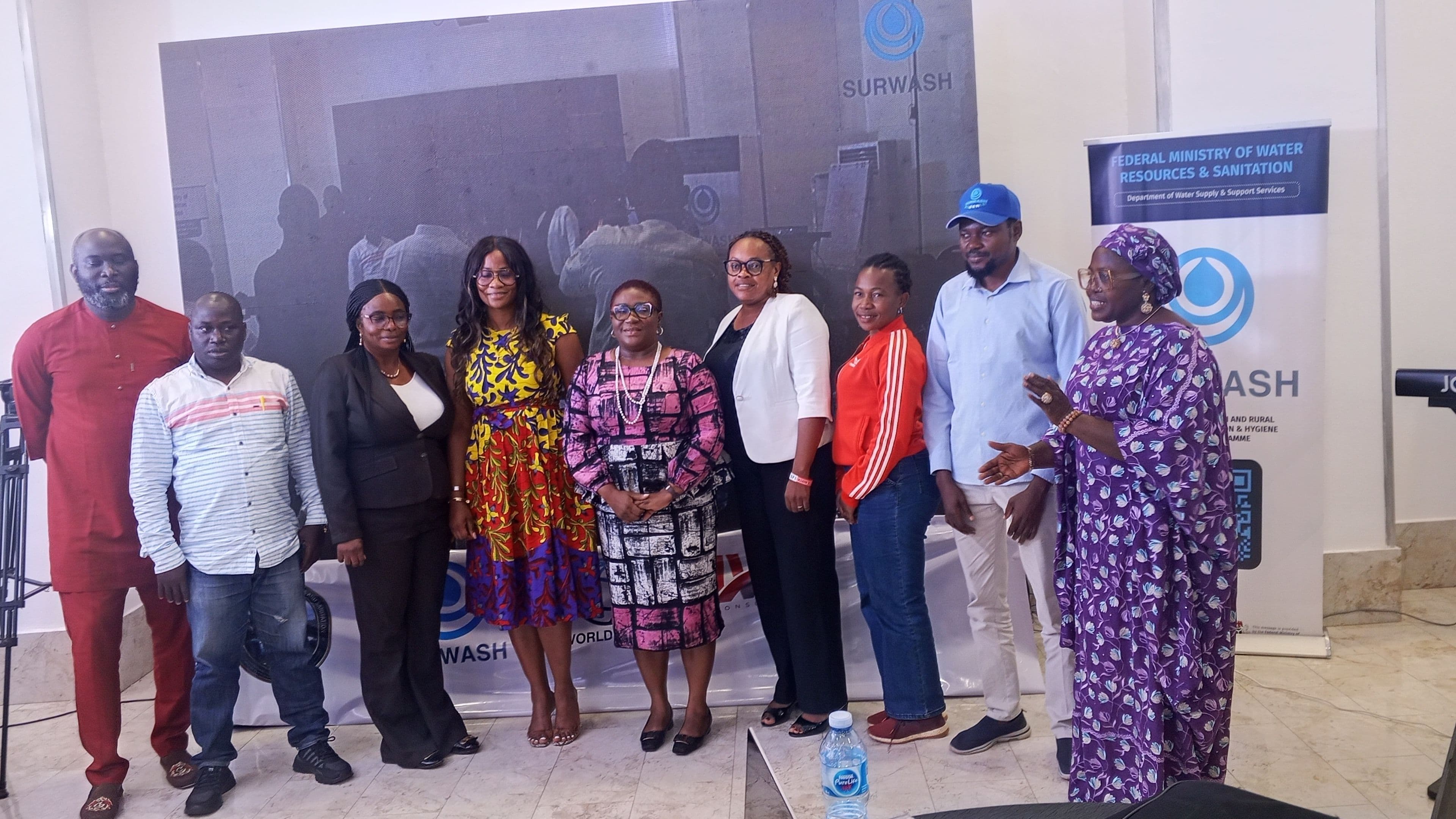

Federal Ministry of Water Resources, World Bank Trains SURWASH Communication Officers
Dutse, Nigeria | 17 August 2026
The Federal Ministry of Water Resources has organized a two -day capacity building workshop for Sustainable Urban and Rural Water Supply, Sanitation and Hygiene (SURWASH) Programme Communication Officers, the training is aimed at taking an important step toward telling the programme development story in a way that people can understand, connect with, and remember.
The message behind the two-day capacity-building workshop that brought SURWASH Communication Officers together in Abuja to sharpen their storytelling, digital publishing, and strategic communication skills, was good WASH story should not end in a report — it should reach people, touch lives, and inspire action.
The workshop, themed “Introduction to the SURWASH Newsletter Website/Blog for the Programme,” was designed to help Communication Officers move beyond traditional reporting and learn how to turn programme activities, data, and achievements into compelling stories.
The workshop on its first day focused on “The Art and Craft of Storytelling.” Participants explored how to move beyond dry reporting by humanising data and complex technical information.
Through practical exercises, participants learned how to identify the angle, hook, and human element in a story. One exercise, the “15-Minute Angle Hunt,” challenged them to take a raw story idea and pitch a clear angle that would make it interesting to readers.
The training also introduced participants to the anatomy of a good digital development story, including its arc, structure, and framework. Rather than simply answering what happened, participants were encouraged to ask deeper questions: Who was affected? Why does it matter? What has changed? And whose life is being improved?
The afternoon session turned to writing for the digital audience. Participants explored the importance of strong hooks, simple language, and impact-focused writing.
They also discussed the responsible use of Artificial Intelligence (AI) in storytelling, including the need to protect the dignity of people featured in development stories and to avoid exploiting vulnerable subjects.
A practical exercise on drafting leads gave participants the chance to write different opening lines for their stories and receive immediate feedback. By the afternoon, they had moved into a hands-on writing session, developing their own 300–500-word development stories with guidance and one-on-one coaching.
The workshop also addressed strategic communication and stakeholder engagement, emphasising that effective communication is essential to programme delivery.
Participants were encouraged to understand their audiences, engage stakeholders effectively, and develop communication approaches that support the wider objectives of SURWASH.
At the end of the workshop, each participant developed, uploaded, and submitted at least one publishable development story for the SURWASH Newsletter Website/Blog.
More importantly, the training equipped Communication Officers with practical skills to tell stories that go beyond activities and statistics — to show people, progress, and impact.
For SURWASH, the message is clear: every borehole, every improved sanitation facility, every institutional reform, and every community reached has a story worth telling. And with better storytellers behind the Programme, those stories can travel further, reach wider audiences, and help more people understand the difference SURWASH is making.